Why Closing on a Toms River Home Depends on Which Town Line You're Standing On
September 17, 2026
September 17, 2026
A seller lists a house in Toms River this fall, prices it right, and gets an accepted offer inside two weeks. Then, ten days before closing, the buyer's attorney asks for a document the seller has never heard of. It isn't a title issue. It isn't the inspection everyone already cleared. It's a municipal certificate the seller assumed didn't apply to them, because a neighbor two streets over sold a house last spring without one.
That scenario plays out because Toms River isn't governed the way most people assume. The name covers a sprawling mainland township that stretches from Silverton to Pleasant Plains, a barrier island community in Ortley Beach, and a separate incorporated municipality, South Toms River Borough, sitting inside the same mailing footprint but answering to its own council and its own code. Three sellers on three streets that all say "Toms River" on the deed can face three different closing requirements. That's the mechanism worth understanding before you list or make an offer here in 2026, not the median price.
For a while, Toms River Township did require a continuing certificate of occupancy before a home could change hands, a $300 inspection adopted in December 2021 and rolled out that July. Township Engineer Robert Chankalian told the council it existed because sellers were passing along homes with dangerous electrical work and undocumented modifications to elevated structures, and buyers had no way to know until something went wrong. By the fall of 2022, more than 500 applications had already been filed under the ordinance, and the council was fielding complaints from both sides: residents who credited it with catching real safety problems, and a councilman who called it a money grab and pushed to repeal it outright.
He eventually got his way. The ordinance was repealed on January 18, 2024, by Ordinance No. 4791-24, and the chapter of township code that once governed it now sits marked "Reserved." If you're reading an older blog post, a cash-buyer's FAQ page, or a secondhand summary that describes Toms River Township as still requiring a resale inspection and fee, that description predates the repeal. It's a fact that used to be true and isn't anymore, and it's exactly the kind of detail that trips up a seller working from a source that hasn't been updated.
Repealing the local ordinance didn't remove every closing requirement. New Jersey's Uniform Fire Code has required a smoke and carbon monoxide alarm certificate before any one- or two-family home in the state changes hands since January 1, 2019, and that rule sits above the township level entirely. In Toms River, it's obtained through the township's Bureau of Fire Prevention rather than any real estate professional, and it comes with a schedule sellers need to respect: request it several weeks ahead of your anticipated closing date, since it isn't same-day paperwork, and the certificate itself is only valid for six months once issued. Closing without one puts the transaction in violation of the Uniform Fire Code. Separately, New Jersey repealed the parallel portable fire extinguisher requirement for one- and two-family dwellings on February 3, 2025, so sellers no longer need to produce that piece, even though older checklists still list it.
That's the floor for a mainland Toms River Township sale. It is not the floor everywhere the name applies.
South Toms River Borough is not a neighborhood inside Toms River Township. It's its own municipality, with its own council, its own code enforcement office, and, as of this year, its own resale process. Since March 26, 2026, a home sale or a change in tenancy there has required a smoke, carbon monoxide, and fire extinguisher compliance certificate from the Ocean County Fire Marshal first, with a copy sent to the borough before the borough will schedule its own separate inspection. That's two sequential government touchpoints in a borough of a few thousand residents, layered on top of whatever the buyer's attorney is already reviewing during the standard New Jersey attorney-review period.
Meanwhile, several neighboring Ocean and Monmouth County towns, including Brick and Wall, require no resale certificate of occupancy at all beyond the statewide smoke certificate. Here's roughly how the requirement lands depending on which jurisdiction actually taxes the property:
| Jurisdiction | Municipal resale inspection? | What's required |
|---|---|---|
| Toms River Township (mainland and barrier island) | No, repealed January 2024 | Statewide smoke/CO alarm certificate only |
| South Toms River Borough | Yes, new as of March 26, 2026 | Ocean County Fire Marshal certificate, then a separate borough inspection |
| Brick, Wall, and many surrounding towns | No | Statewide smoke/CO alarm certificate only |
The practical takeaway isn't that one town is stricter for its own sake. It's that the requirement follows the taxing municipality, not the mailing address, and "Toms River" on an envelope tells you almost nothing about which column you're in. Anyone listing or buying here should confirm the taxing municipality directly from the tax bill before assuming last year's transaction down the street sets the template for this one.
Underneath the municipal patchwork sits a state requirement that doesn't care about town borders at all. Since March 20, 2024, New Jersey's Flood Risk Notification Law has required every seller in the state to answer a set of flood-specific questions on the Property Condition Disclosure Statement before a buyer becomes contractually obligated, covering flood zone location, flood history, and prior insurance claims. The state's own guidance frames the reasoning plainly: flood risk in New Jersey is expanding into areas that weren't previously understood to flood, and buyers deserve to know what they're stepping into before they're locked into a contract. For lagoon-front and bayfront parcels along Barnegat Bay, this disclosure sits alongside the FEMA zone designation the property already carries. For homes further inland that residents may not think of as flood-exposed at all, it's often the first time the question comes up in writing.
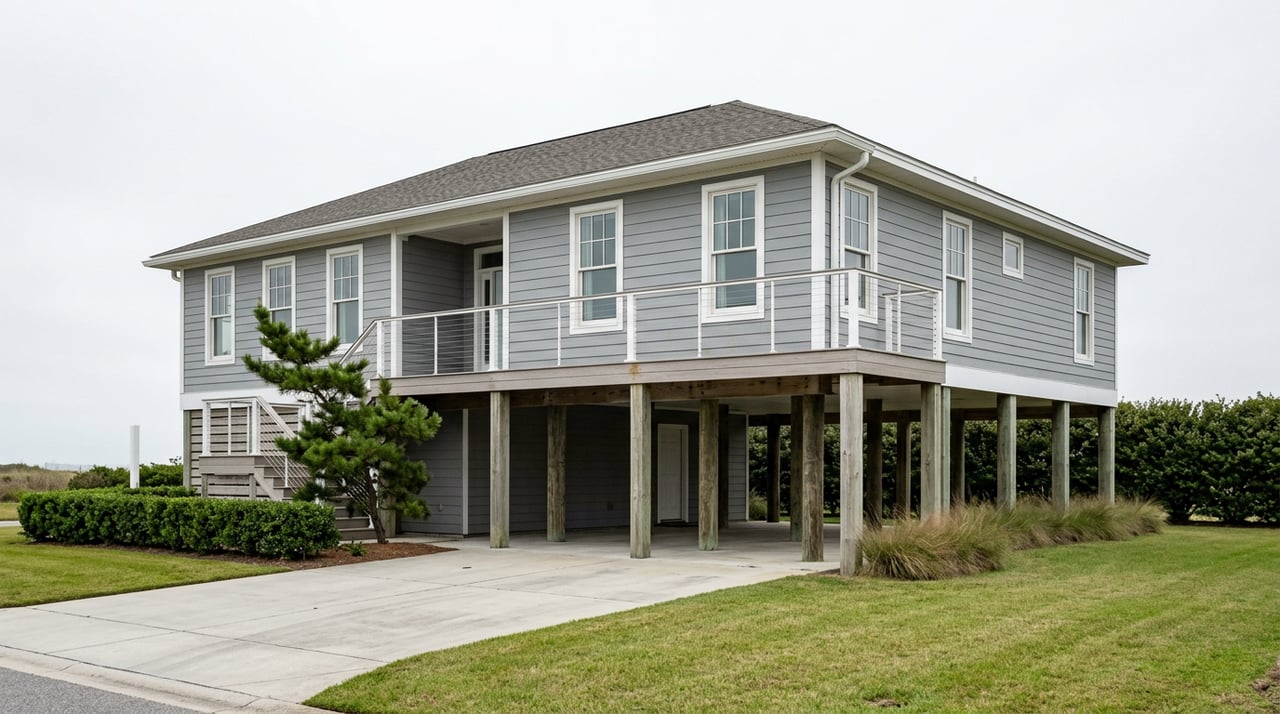
Ortley Beach and the lagoon streets around it carry a second layer of complexity that mainland sellers don't face. On January 20, 2026, the New Jersey Department of Environmental Protection formally adopted its Resilient Environments and Landscapes rule, which raises the design elevation standard for new construction and substantial improvements in tidal flood areas to four feet above FEMA's base flood elevation, a marked increase from the one to two feet builders worked with before. Engineering and regulatory analysis of the rule confirms this figure applies statewide to coastal and tidally influenced parcels, which covers essentially every lagoon and bayfront lot in this stretch of Toms River Township.
The rule included a legacy grace period for projects already in the pipeline, and that window was originally set to close on July 19, 2026 for any permit application not yet deemed complete by that date. State regulators proposed extending that legacy period by another year, to July 2027, and continued honoring the original legacy terms past the July deadline while that extension moved through review. For a seller who elevated or rebuilt a home on the island years ago, none of this forces retroactive changes. But for anyone planning a substantial renovation before listing, or anyone buying with plans to add square footage after closing, the elevation math that applied to a project two years ago is not the math that applies now, and it's worth running before you set a listing price or write an offer that assumes the old numbers still hold.
Pull your tax bill and confirm the actual taxing municipality before you assume anything about your closing checklist. If you're in Toms River Township proper, budget time for the smoke and CO certificate through the Bureau of Fire Prevention and don't wait until the week of closing to request it. If you're in South Toms River Borough, build in extra time for the two-step Fire Marshal and borough inspection process that started this spring. Every seller in the state, regardless of zone or town, needs the flood disclosure questions completed accurately before the buyer signs. And if the property sits on the barrier island and any substantial work has been done or is planned, loop in your contractor or engineer on where that project falls under the REAL rule's elevation standard before you commit to a price or a scope.
Does Toms River Township still require a certificate of occupancy to sell a home? No. The township's continuing certificate of occupancy ordinance was repealed on January 18, 2024. The statewide smoke and carbon monoxide alarm certificate is still required.
Is the smoke certificate the same as a town occupancy inspection? No. It's a narrower, state-mandated check specifically for smoke and CO alarm compliance, obtained through the local fire prevention bureau rather than a building or zoning department.
Does South Toms River Borough follow the same process as Toms River Township? No. South Toms River is a separate municipality and, since March 26, 2026, has required an Ocean County Fire Marshal certificate followed by its own borough inspection, a two-step process the township itself does not have.
Do I need to worry about the REAL rule if I'm not planning any construction? The rule governs new construction and substantial improvements. If you aren't renovating or rebuilding, it doesn't change your disclosure obligations, though the flood risk disclosure law still applies to every sale regardless of construction plans.
Closing requirements in this part of Ocean County are decided block by block, not by zip code. If you're weighing a sale or a purchase anywhere between Silverton and Ortley Beach, Christopher Pizzola can walk through exactly which requirements apply to your specific address before you list or make an offer. Request a private consultation to get the paperwork right the first time.
Stay up to date on the latest real estate trends.


Providing his clients with a true luxury brand and representation is the foundation of his business. Contact him today to find out how he can be of assistance to you.