Jersey Shore Waterfront vs Inland Homes: What to Know
June 18, 2026
June 18, 2026
If you are torn between a true waterfront home and a near-shore property at the Jersey Shore, you are not alone. Both can deliver a coastal lifestyle, but they often come with very different pricing, ownership demands, and long-term considerations. Understanding those differences can help you focus your search, protect your budget, and buy with more confidence. Let’s dive in.
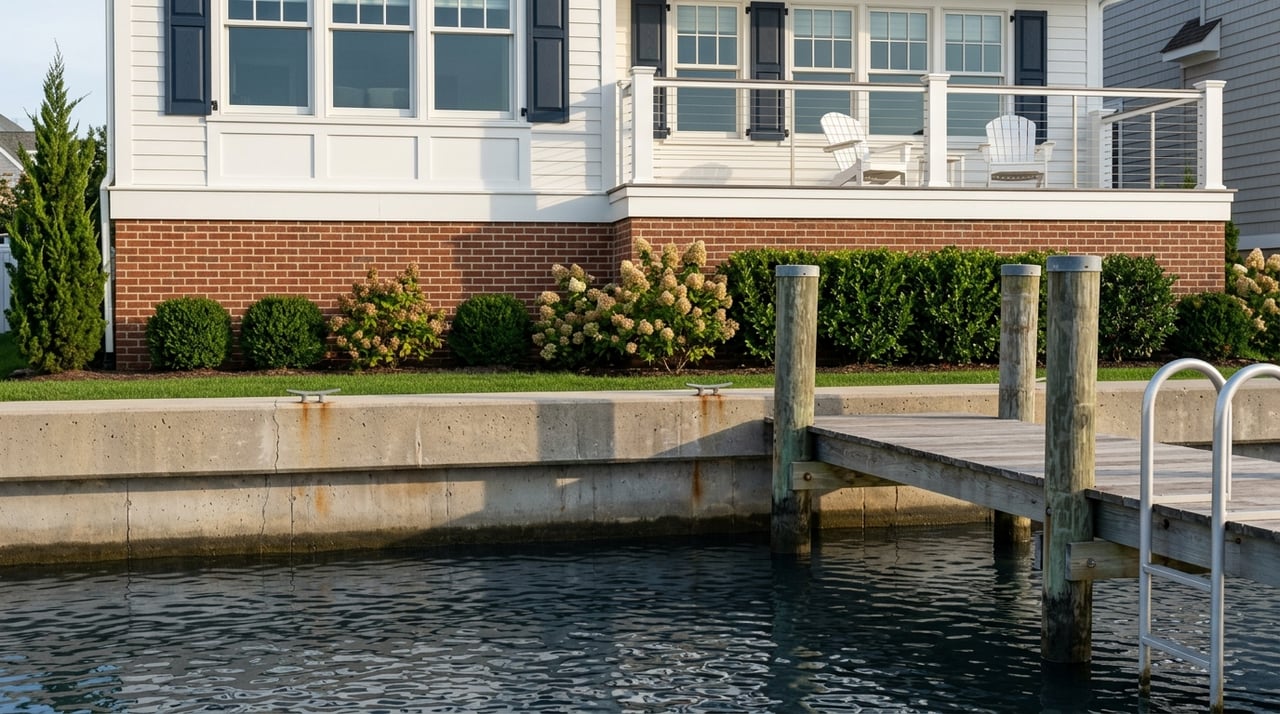
At the Jersey Shore, a true waterfront home usually has direct frontage on the ocean, bay, river, inlet, creek, canal, or lagoon. A near-shore home is close to the water but does not directly front it. That may sound like a small distinction, but in practice it creates two very different buying experiences.
New Jersey also treats the coastal zone as broader than the beach itself. It includes areas adjacent to coastal waters, inland areas, and a range of uses from waterfront neighborhoods to commercial districts and beaches. So a home can feel very coastal without being a direct waterfront property.
The biggest difference between waterfront and near-shore homes often shows up in pricing. At the Jersey Shore, buyers are not only paying for square footage. They are also paying for direct access, views, and scarcity.
Research on coastal housing shows a clear distance-decay effect. In simple terms, home values tend to fall as properties get farther from the shoreline. Studies also show that frontage type, beach access, and the quality of the view each influence value on their own.
True waterfront homes are limited by geography. There are only so many parcels with direct frontage, and that finite supply tends to support higher prices. That is one reason many buyers view waterfront as a highly specific asset rather than just another home close to the beach.
A current market snapshot in Monmouth County helps illustrate the point. Redfin reported 193 waterfront homes for sale with a median listing price of $790,000, compared with a countywide median sale price of $722,832 in May 2026. Inventory and pricing shift over time, but the broader takeaway remains the same: direct frontage is usually priced separately from the general market.
A premium waterfront price is often tied to what you can actually experience from the property. Coastal research has found roughly a 15.7% premium for beachfront view in one cited study. That means even among homes near the shore, the quality of the view can materially affect value.
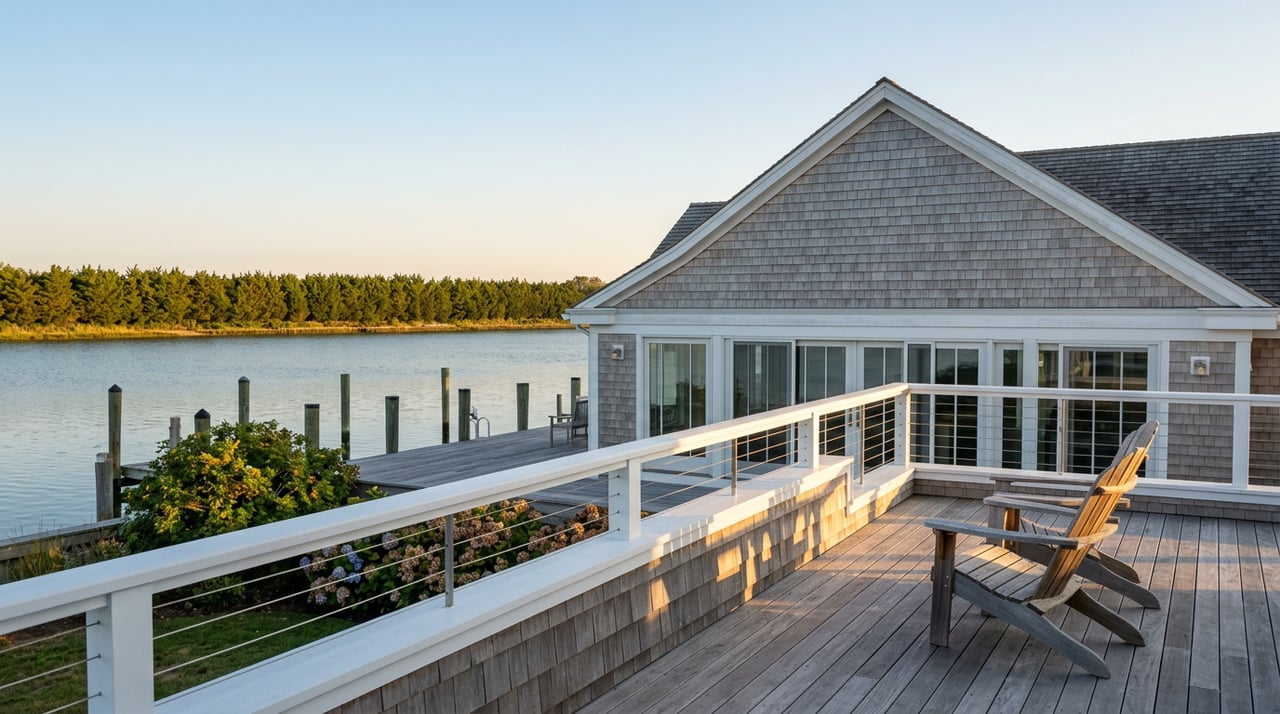
Access can matter just as much. Research has also found that dock usability can create a significant premium in coastal markets, which helps explain why buyers often pay more for properties with meaningful boating functionality. At the Jersey Shore, that can make a major difference for lagoon-front, riverfront, or bayfront homes.
Near-shore homes still benefit from coastal proximity, but they usually do not command the same direct-frontage premium. That makes them appealing if you want the lifestyle benefits of the shore without taking on every ownership responsibility that can come with shoreline property.
For many buyers, near-shore means you can enjoy beaches, marinas, and waterfront districts through streets, walkways, easements, dune walkovers, or short drives. You may still get a strong location premium if the home is especially convenient to the water, but you are usually buying access rather than ownership of the shoreline itself.
If your goal is year-round use, a simpler maintenance profile, or less site-specific complexity, near-shore may be the better fit. You can still enjoy a water-oriented lifestyle while avoiding some of the practical burdens that direct waterfront ownership can bring.
That does not mean near-shore is always simple. A property can still fall within New Jersey’s coastal jurisdiction even if it is not directly on the water. Still, near-shore homes often present fewer shoreline-related issues than homes with direct frontage.
The lifestyle photos are easy to picture. The real work begins when you look at flood exposure, permits, title questions, and long-term resilience.
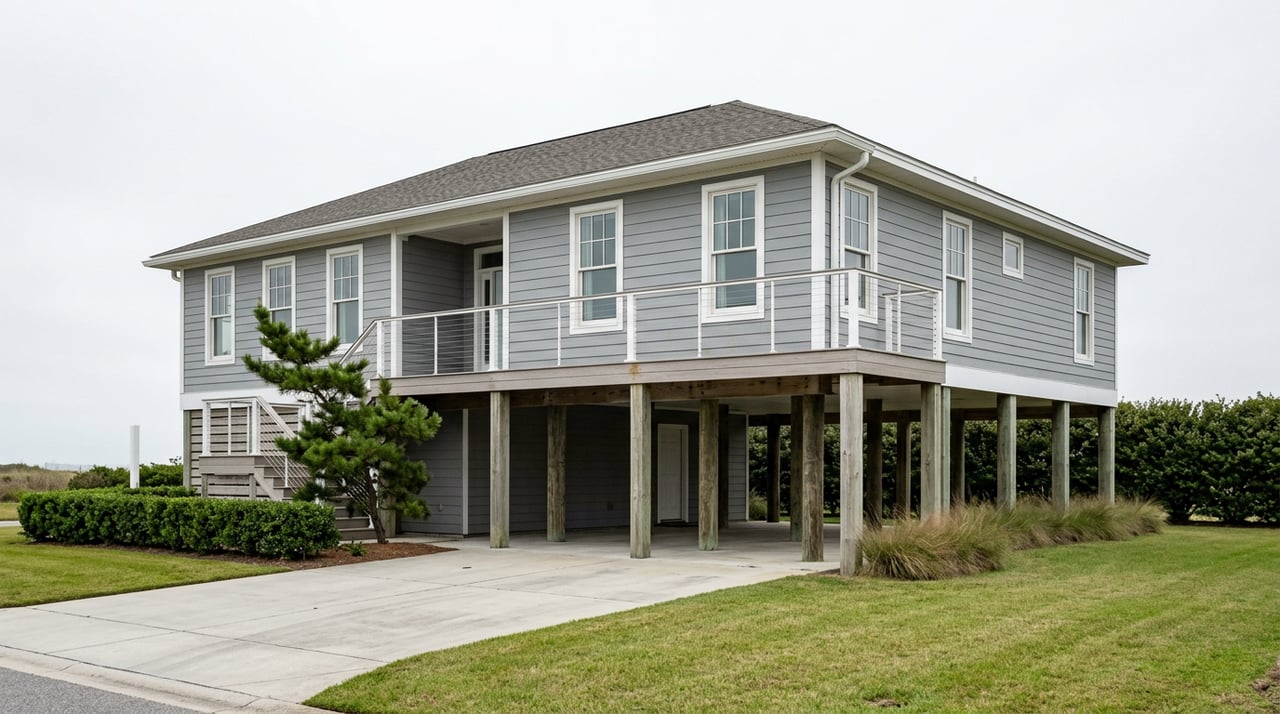
Waterfront buyers should pay close attention to flood zones, elevation, and insurance requirements. NJDEP defines coastal high hazard areas as flood-prone areas subject to high-velocity waters in V zones, plus areas within 25 feet of oceanfront shore protection structures that are subject to wave run-up and overtopping.
NJDEP also notes that flood hazard areas include FEMA A and V zones as well as other unmapped flood-prone areas. FEMA says homeowners in high-risk A or V zones with government-backed mortgages must purchase flood insurance. FEMA also notes that flood risk can depend on factors like elevation, first-floor height, distance to flooding sources, and utility placement.
One of the biggest practical differences with true waterfront is the permit layer. In New Jersey’s coastal zone, construction generally requires a permit, and work in tidal waters at or below the mean high water line may require a Waterfront Development Individual Permit if it does not qualify for a simpler authorization.
NJDEP specifically lists docks, piers, jet-ski ramps, boat lifts, and bulkheads as common examples. If a property includes or may one day include these improvements, that should be part of your due diligence before you make assumptions about use or future upgrades.
New Jersey has a local nuance that matters a great deal for some waterfront buyers: tidelands. NJDEP explains that tidelands, also called riparian lands, are lands now or formerly flowed by the tide. The State owns currently flowed tidelands and claims certain formerly flowed tidelands shown on its maps.
This matters because a tidelands claim can affect title. In some cases, a riparian grant may be used to clear title where a former tidal area is now filled. Structures or uses over state-owned tidelands may also require licenses.
For lagoon-front or shorefront properties, this can become especially important. A home may offer the waterfront lifestyle you want, but the legal framework behind that location may require a closer review than a near-shore home on a standard interior lot.
Waterfront ownership often involves more ongoing oversight. Bulkheads, shoreline structures, flood-mitigation features, and insurance all add layers that many near-shore homes do not have to the same degree.
That matters even more in New Jersey’s current risk environment. NJDEP says nearly two-thirds of New Jersey’s coastline is already at high or very high risk to coastal erosion, and 98% is projected at medium or very high risk to sea-level rise. The state’s 2026 REAL rule amendments were adopted to address sea-level rise, storm surge, and chronic flooding.
For buyers, the takeaway is not that waterfront should be avoided. It is that waterfront should be evaluated with sharper due diligence, clearer budgeting, and a realistic understanding of long-term ownership responsibilities.
The right choice depends on how you plan to use the home and what tradeoffs you are comfortable making.
If those features are central to your lifestyle, true waterfront may justify the added complexity. For many buyers, there is simply no substitute for direct frontage.
If your ideal day still involves the beach, marina, or waterfront district, but not necessarily a dock in your backyard, near-shore can offer a smart middle ground.
Whether you are looking at a waterfront estate or a near-shore home, asking the right questions early can save time and prevent surprises.
These questions are especially important in premium shore markets, where two homes may look similar online but carry very different ownership realities once you get into the details.
At the Jersey Shore, true waterfront is about owning the shoreline experience. Near-shore is about enjoying access to that experience without taking on every part of waterfront ownership. That difference tends to show up most clearly in price, scarcity, flood exposure, dockage potential, and the amount of due diligence needed before closing.
If you want help weighing a direct waterfront purchase against a near-shore alternative in Monmouth or Ocean County, Christopher Pizzola can help you evaluate the tradeoffs, identify the right opportunities, and move forward with a more informed strategy.
Stay up to date on the latest real estate trends.


Providing his clients with a true luxury brand and representation is the foundation of his business. Contact him today to find out how he can be of assistance to you.