Rumson for NYC Buyers: Is It the Right Move?
February 19, 2026
February 19, 2026
You love the idea of a quieter life with water views, but you still need to reach Manhattan without losing half your day. If that sounds like you, Rumson might be on your short list. You want real numbers, clear trade-offs, and a way to decide with confidence. In this guide, you’ll get a practical look at commute options, school context, pricing, taxes, and waterfront due diligence so you can decide if Rumson fits your lifestyle and budget. Let’s dive in.
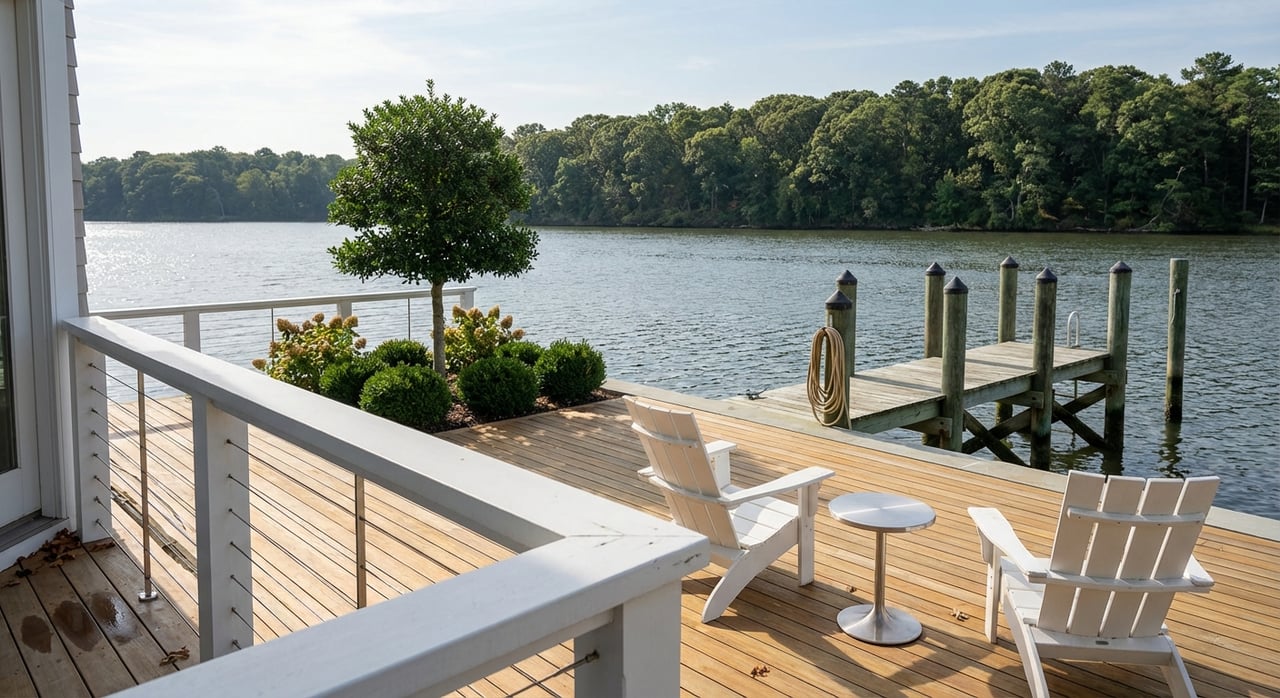
Rumson is a small, waterfront borough on the Navesink and Shrewsbury Rivers in Monmouth County. You get a true coastal-suburban feel, mature streetscapes, and easy access to ocean beaches in nearby Sea Bright and Sandy Hook. That combination is a primary draw if you want space, privacy, and boating or paddle time built into your routine.
The scale is intimate. Rumson’s population was 7,343 in the 2020 Census, and the borough sits within the New York–Jersey City–White Plains metro area. The setting feels peaceful without pulling you fully out of the region’s economic orbit. For commute-sensitive buyers, the Census also lists a mean travel time to work around 45 minutes, which reflects a blend of ferry, train, and car commuters who choose the best mode for the day. You can review these baselines in the Census QuickFacts for Rumson.
There is no single “right” way to commute here. Your door-to-desk time depends on where you live in Rumson, where you work in Manhattan, and which mode you choose on a given day.
Bottom line: Rumson gives you mode flexibility. If you can tolerate a door-to-desk near an hour on most days, the trade-off in lifestyle can be well worth it. If you require a consistent sub-60-minute Midtown commute, you should model exact routes and times from your target Rumson neighborhood before you decide.
If strong public schools are a priority, Rumson compares well in the region. Rumson-Fair Haven Regional High School posts high marks for academics and AP participation, which is a key reason many NYC families target this area. You can review an independent profile of the high school on Niche, and then match those metrics with specific programs you care about. Local elementary and middle schools in the Rumson Borough district also report high proficiency levels in public rating systems. If private or parochial options matter, there are regional choices in Monmouth County, though the brand depth differs from some Westchester enclaves. The best approach is to align programs and commute logistics with your family’s needs early in the search.
Rumson sits in a premium tier on price. Because inventory is smaller and waterfront estates can swing medians, different trackers publish different snapshots. Recent ranges in the research show Rumson often trading around 700 to 850 dollars per square foot for non-waterfront single-family homes in desirable neighborhoods, with waterfront and estate properties well above that. The key is to compare apples to apples: a non-waterfront colonial in Rumson versus a similar home in Ridgewood or Port Washington, not Rumson waterfront versus an inland listing elsewhere.
How Rumson stacks up to typical suburban alternatives in broad strokes:
These are directional comparisons to help you frame expectations. For exact pricing, lean on current local comps for the home style and lot type you want.
New Jersey property taxes are among the highest in the country, and Rumson ranks near the top within the state. Recent reporting shows an average property tax bill in Rumson around 22,950 dollars per year. That is a meaningful input to your monthly cost. See the statewide context in this New Jersey property tax report.
To build a clean budget, model these line items before you fall in love with a house:
Even if a list price looks comparable to closer-in towns, the combination of Rumson’s taxes and potential flood coverage can shift the total monthly picture.
The waterfront lifestyle is a major advantage here. Private docks, marinas, riverfront parks, and quick access to the beach define day-to-day living. With that upside comes responsibility to do careful flood due diligence.
Start with the borough’s resources. Rumson maintains an active Flood Management page that points you to FEMA maps, local design standards, and mitigation programs. It is the right first stop for parcel-level research. Review guidance and links on Rumson’s floodwater management page.
If a home sits in a FEMA Special Flood Hazard Area, your lender will typically require flood insurance. Even outside mapped zones, it is smart to get a quote. Ask about elevation certificates, prior claims history, and expected premium ranges for both NFIP and private carriers. If docks, bulkheads, or seawalls are present, budget for inspection and ongoing maintenance. These details can affect affordability, resale, and peace of mind.
If speed to Midtown trumps everything, closer-in rail towns can be compelling. Westchester villages with Metro-North express service often cut your train time. North Jersey communities along Midtown Direct or Bergen County Line routes can do the same. Long Island LIRR branches like Port Washington and Great Neck usually post fast runs to Penn or Grand Central. Many of those towns also show broader housing stock, which can lower price per square foot compared to Rumson’s waterfront-weighted market.
If your top priority is the water, larger lots, and a quieter coastal feel, Rumson often wins. The trade is a longer and more variable commute for most jobs in Manhattan, plus higher average property taxes and careful attention to flood risk. Your personal tipping point depends on how you value daily routine versus weekend lifestyle and views.
Use this quick framework to pressure-test your decision:
Commute tolerance. What is your maximum reliable door-to-desk time each weekday? If you need consistent sub-60 minutes to Midtown, test exact ferry and rail runs from your preferred Rumson area. Check current timetables for NJ Transit and SeaStreak.
Price versus space. Do you value water access and larger lots over the lowest price per square foot? Rumson rewards lifestyle first, then value.
School alignment. Review Rumson-Fair Haven Regional High School’s profile on Niche, then compare AP, college matriculation, and extracurriculars to your other target districts.
Taxes and insurance. Are you comfortable with Rumson’s higher average tax bill, plus potential flood insurance and waterfront maintenance if applicable? See the statewide tax context on Patch.
Resale horizon. If you may relocate within a short window, remember that boutique, high-end waterfront markets can have fewer annual transactions. Pricing and presentation matter for speed and outcome.
Lifestyle fit. Do daily river sunsets, boat slips, and a small-town coastal rhythm outweigh an added 10 to 20 minutes each way on your commute? If yes, Rumson likely fits.
You deserve a process that balances numbers with lifestyle. We help you model real door-to-desk commutes from specific Rumson neighborhoods, not just station-to-station times. We pair property tours with parcel-level flood checks and connect you with local insurance resources so you can budget with clarity. If you want new construction or a renovation play, we bring on-the-ground construction experience to assess feasibility and cost. When you are ready to buy, we leverage a Sotheby’s network and curated outreach to surface on and off-market opportunities across Rumson, Fair Haven, Sea Bright, and Spring Lake.
If you are weighing Rumson against Westchester, Long Island, or North Jersey, we will help you compare price-per-square-foot comps, property taxes, and commute options side by side. The goal is simple: a confident, data-backed decision that fits how you actually live.
Ready to explore Rumson and nearby Shore towns with a clear plan? Schedule time with Christopher Pizzola for a private consultation.
Stay up to date on the latest real estate trends.


Providing his clients with a true luxury brand and representation is the foundation of his business. Contact him today to find out how he can be of assistance to you.