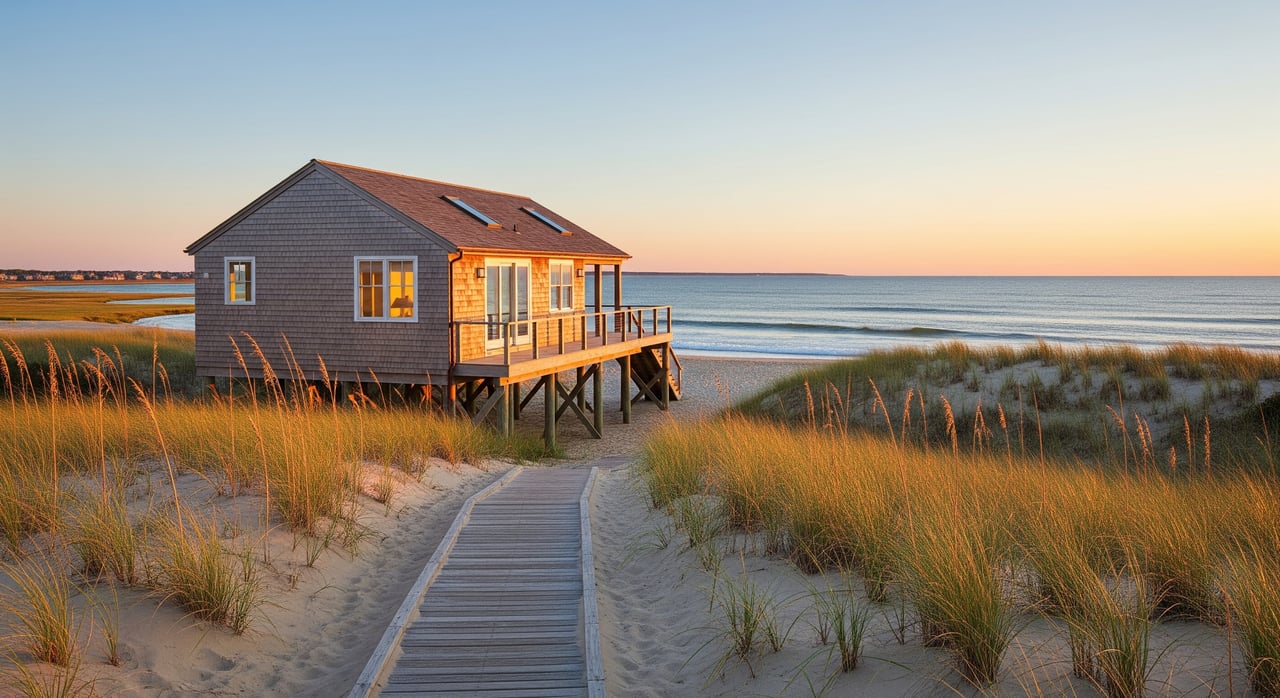
Build vs Buy on the Jersey Shore Barrier Islands
October 16, 2025
October 16, 2025
Torn between designing your dream beach house or grabbing a turnkey Shore classic? On New Jersey’s barrier islands, the decision to build or buy comes with unique rules, costs, timelines, and flood-risk questions. You want a move that fits your lifestyle and protects value over time. This guide gives you a practical framework, clear cost drivers, and a step-by-step checklist so you can decide with confidence. Let’s dive in.
Building gives you full control over layout, elevation, and materials, and you can design to the latest coastal codes. That control comes with longer timelines, more permits, and higher site-specific costs like piles and elevation. Buying offers speed and less permitting upfront, but older homes can have lower elevations or prior damage that affect insurance and long-term costs. As a quick screen, compare new-build ballparks to purchase price plus any required elevation or retrofit costs, using local contractor input and your time horizon.
Barrier-island projects typically involve state coastal rules, local approvals, and federal floodplain standards. Expect overlap and sequencing.
Most significant coastal work is reviewed by NJDEP’s Coastal Management Program under CAFRA. Larger projects often require an individual permit with completeness checks and public-comment steps, so plan for several months. Start with the NJDEP Coastal Management Program overview and confirm your site’s permit triggers.
For timing, the administrative code outlines completeness and notice steps that structure the timeline. Review the relevant process language in the CAFRA administrative code summary when mapping your schedule.
Even with state permits, you still need municipal approvals. Zoning, planning board review, variances, building permits, and final COs vary by town. Many Shore municipalities publish guidance for home elevation and floodplain upgrades, such as Ocean City’s elevation FAQ that mirrors what you will see in other towns.
If repairs or improvements reach 50 percent or more of a home’s pre-project market value, FEMA’s substantial improvement rule typically requires bringing the entire structure up to current standards, including elevation. Read the core definition and local application context in FEMA’s substantial improvement guidance. Ask for an elevation certificate or recent as-built survey to document the lowest floor.
Work near beaches, dunes, and bulkheads often needs dedicated approvals and added studies. Conservation setbacks and public-access rules can limit design options. Start early with NJDEP’s coastal program to understand site constraints and whether shoreline hardening is allowed.
New Jersey is projected to experience about 1.0 to 2.1 feet of sea level rise by 2050 under consensus scenarios, with larger increases possible by 2100. That means more frequent tidal and storm-related flooding on barrier islands across a typical ownership period. See state-specific projections from Rutgers’ NJ Climate Resource Center.
Elevation on piles, flood-resistant materials, utilities set above the required height, and protected dunes are more than code checkboxes. They influence your insurance options and long-term value. FEMA’s Risk Rating 2.0 framework now prices flood insurance using property-specific risk, so design decisions and verified elevation matter.
Costs are driven by elevation requirements, pile foundations, wind- and flood-resistant materials, and site logistics. As noted earlier, broad New Jersey ranges are often cited around $200 to $600+ per square foot for coastal builds, with customization and elevation pushing higher. Use local builder and engineer estimates for accuracy, and add 10 to 20 percent for contingencies.
Turnkey elevation projects can range from roughly $40,000 for small, simple cottages to $150,000+ for larger or more complex homes, depending on foundation type, utilities, stairs, and desired height. Many towns outline common pitfalls and steps, like Ocean City’s elevation guidance. If a property is substantially or repetitively damaged and insured through NFIP, FEMA’s Increased Cost of Compliance program may provide up to $30,000 toward required mitigation.
Expect months for state permitting on larger projects due to completeness reviews and public notice, plus municipal board calendars. The process milestones in the CAFRA administrative code help set expectations. Construction for an elevated coastal home often takes 6 to 18 months depending on size, season, and supply chain.
FEMA’s Risk Rating 2.0 uses elevation, distance to water, and structure details to price flood coverage. Get early quotes for your specific parcel from both NFIP and private carriers so you can compare scenarios for a new build, an elevated retrofit, or an as-is purchase.
If any part of the collateral lies in a Special Flood Hazard Area, most lenders will require flood insurance at closing. Review the standard requirement in Fannie Mae’s flood insurance guidance, and plan premiums into total cost of ownership.
Waterfront and walk-to-beach locations often command premiums, but buyers are focusing more on resilience. A higher lowest-floor elevation, modern utilities, and documented flood history can help marketability and insurance conversations, especially as risk-based pricing expands.
Request or confirm:
Consider building if you want a specific layout and finish, the existing structure would need major elevation or retrofits that approach new-build cost, you have the time for permits and construction, and you are comfortable with project risk. Buying may be the better fit if you need a faster move, the home’s existing elevation and insurance profile align with your goals, there is clear documentation on elevation and claims, or local constraints make building impractical.
There is no one-size Shore answer. Anchor your decision in site-specific permitting, verified elevation, realistic costs, and an honest timeline. With the right plan, you can balance Shore lifestyle, risk, and long-term value.
Ready to evaluate a specific lot or listing along the Jersey Shore? For discreet guidance and on-the-ground expertise, connect with Christopher Pizzola.
Stay up to date on the latest real estate trends.


Providing his clients with a true luxury brand and representation is the foundation of his business. Contact him today to find out how he can be of assistance to you.